
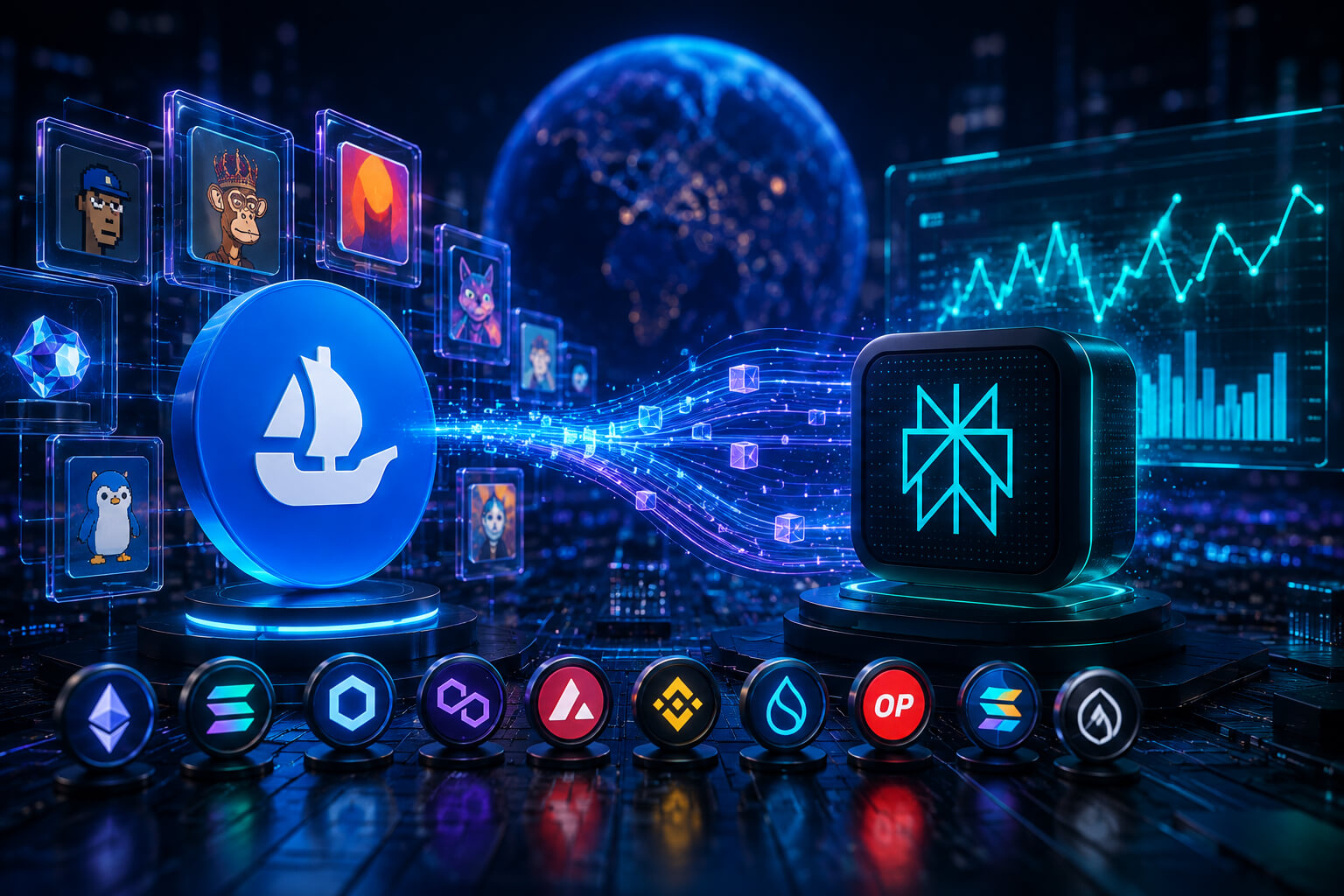
OpenSea is pushing its blockchain data into a new kind of interface. The NFT marketplace has connected its cross-chain market information with Perplexity Computer, giving the AI system access to live data covering NFTs, tokens, and activity across more than 25 blockchain networks.
The move gives Perplexity users another way to explore what is happening onchain. Instead of checking several marketplaces and analytics tools, users can ask questions about active collections, token movement, or trading trends and receive answers built around OpenSea’s market data.
Perplexity Can Now Search Live OpenSea Market Activity
The integration allows Perplexity Computer to use OpenSea data when users ask about NFTs, collectibles, fungible tokens, and broader onchain trading activity. That means the AI can answer questions based on fresher marketplace information instead of relying only on older webpages or static references. For crypto users, that difference matters because market conditions can change quickly, especially when trading volume suddenly moves from one collection or network to another.
More Than 25 Blockchains Are Included
OpenSea says the integration covers market activity across more than 25 blockchain networks. That gives Perplexity a much broader view than an AI tool focused on a single ecosystem. NFT trading is no longer concentrated entirely on Ethereum, so users increasingly need data from multiple chains to understand where activity is building. By linking its multichain information with Perplexity, OpenSea is making that broader market easier to query through natural language.
AI Agents and NFT Data Are Starting to Fit Together
Blockchain data has characteristics that make it especially useful for AI-powered research. Transactions are public, wallet activity can be tracked, and market behavior can often be verified directly onchain. OpenSea CEO and co-founder Devin Finzer has argued that this type of open and live information is well suited to AI systems because people are already asking assistants what is happening across crypto markets. Giving those assistants direct access to marketplace data could make their responses more useful and more timely.
OpenSea Is Becoming More Than an NFT Marketplace
The Perplexity integration also fits OpenSea’s broader shift beyond its original identity as an NFT marketplace. Through OS2, the company has expanded into both fungible tokens and NFTs across multiple networks. OpenSea has also explored additional crypto trading products and continued work around its planned SEA token. Together, those moves suggest the company wants to become a wider onchain trading platform rather than remain focused on digital collectibles alone.
OpenSea’s Multichain Footprint Keeps Growing
OpenSea’s network coverage has steadily increased as its strategy has expanded. OS2 originally launched with support for a large number of chains, and the latest Perplexity integration now covers more than 25 networks. That matters because an AI assistant is only as useful as the information it can access. Broader blockchain coverage gives Perplexity a better chance of identifying activity that may be developing outside the biggest NFT ecosystems.
Some Details About the Integration Are Still Missing
OpenSea and Perplexity have confirmed the connection, but some technical details remain unclear. The companies have not published a complete breakdown of every data field available through the integration, and the practical limits of certain queries have not been fully explained. Those details will become more important if traders begin using AI assistants as serious market research tools rather than simply as convenient search engines.
What This Could Mean for NFT Traders
NFT traders have traditionally relied on marketplace rankings, floor-price trackers, social media chatter, and specialist analytics platforms to spot activity. AI could simplify part of that process. A user could ask which NFT collections are seeing unusual volume, which chains are attracting more trading activity, or where momentum has shifted during a certain period. Instead of manually assembling that information, the AI could do much of the initial searching and comparison.
NFT Discovery Could Become More Conversational
The broader shift may change how people discover NFTs. Instead of opening several dashboards and filtering through market statistics, users may increasingly describe what they want to find in ordinary language. Questions such as which collections are gaining buyers, where volume is increasing, or which assets are becoming more active could become standard ways to explore the market. OpenSea’s Perplexity integration is an early example of that transition from dashboard-based research toward conversational onchain discovery.
The integration is still developing, and its usefulness will depend on how much real-time information Perplexity can reliably access. Still, the direction is becoming clearer. NFT market data is starting to move beyond traditional marketplaces and into AI systems that can interpret, compare, and explain what is happening across multiple chains.
The next major NFT research tool may not look like a traditional analytics dashboard. It may simply start with a question.
Sources
- BigGo Finance: OpenSea Pipes Live NFT Data Into Perplexity Computer Across 25+ Chains
https://finance.biggo.com/news/3327d9c0-0da8-4bd4-b942-974b8443ae93 - OpenSea
https://opensea.io/ - Perplexity
https://www.perplexity.ai/