
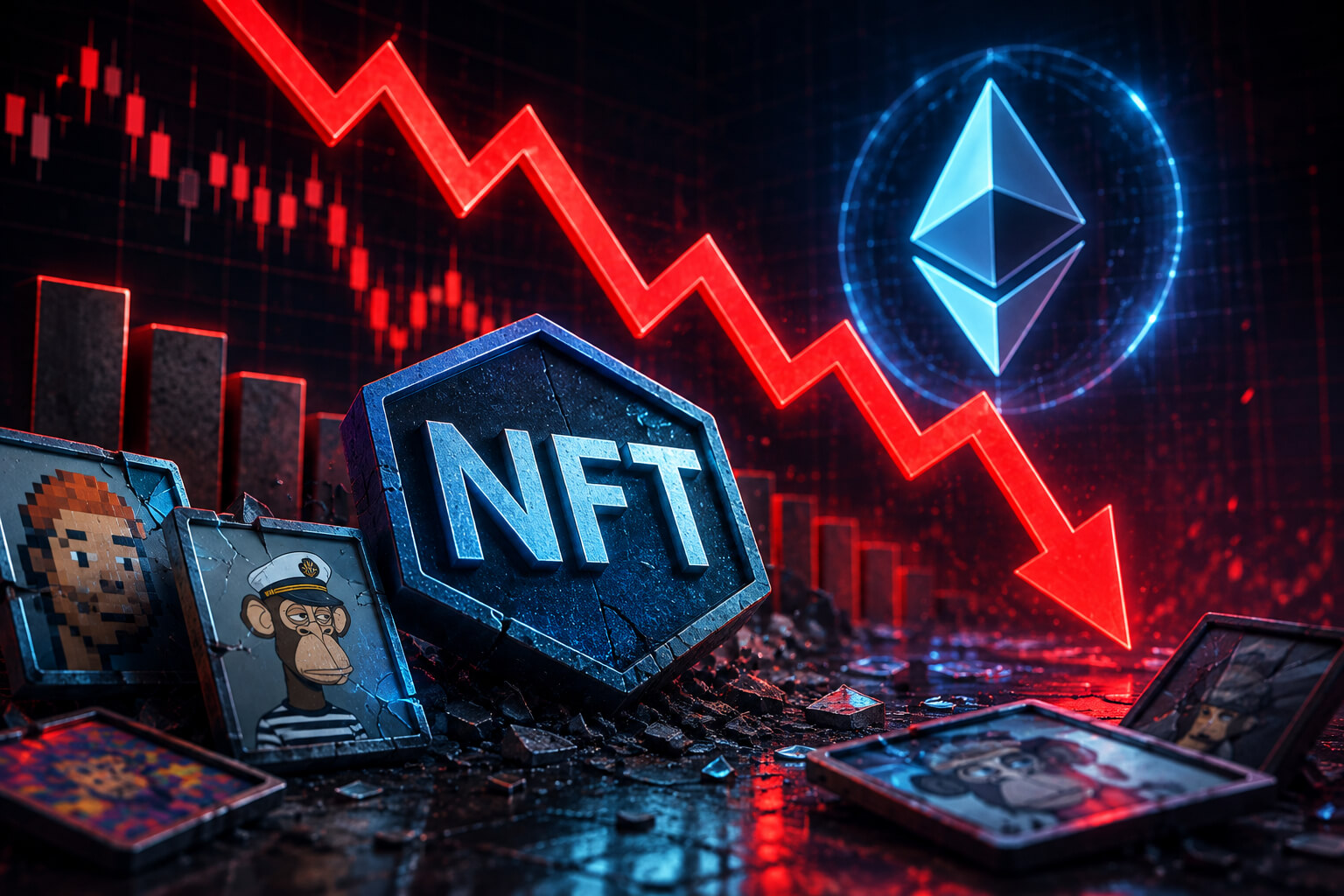
The NFT market had a difficult week, with global sales falling sharply even as more blockchain addresses appeared to participate.
NFT sales dropped 44.7% over seven days to roughly $63.3 million, down from about $114.5 million during the previous comparable period. The decline was significant, but the participation numbers moved in the opposite direction. Buyer addresses rose 30.48% to 227,316, while seller addresses increased 54.64% to 247,373.
Transactions still fell 14.13% to 802,330.
That combination suggests the NFT market is not simply losing participants. More wallets are showing up, but traders appear to be spending less and completing fewer transactions.
Ethereum Still Dominates NFT Sales
Ethereum remained the largest blockchain for NFT trading despite experiencing one of the steepest weekly declines.
Ethereum-based NFTs generated approximately $35.56 million in organic sales during the period, representing a 49.01% decrease from the previous week. Buyer addresses nevertheless increased 34.34% to 33,105.
The numbers show how Ethereum continues to hold a substantial lead even during weaker market conditions. Its sales total was still several times larger than the volume recorded by most competing NFT networks.
CryptoSlam also recorded around $1.66 million in Ethereum wash-trading activity. When that figure is included, Ethereum’s reported NFT volume reached approximately $37.22 million.
Bitcoin NFT Sales Fall Nearly 60%
Bitcoin remained the second-largest network for NFT sales, but its weekly volume suffered an even sharper contraction.
Bitcoin NFT sales fell 59.53% to approximately $8.68 million. Despite that decline, the number of buyer addresses climbed 41.11% to 10,161.
The divergence between sales and buyers is notable. More wallets interacted with Bitcoin NFTs, yet overall spending dropped substantially. That may indicate smaller purchases, reduced speculative activity, or fewer high-value transactions compared with the previous week.
Bitcoin also recorded around $85,595 in reported wash-trading volume, bringing its combined weekly volume to roughly $8.77 million.
Polygon Holds Third Place as Wash Trading Jumps
Polygon ranked third among the major NFT networks with approximately $7.03 million in organic sales.
Its weekly sales declined 34.29%, while buyer addresses fell 18.53% to 85,607. Unlike Ethereum and Bitcoin, Polygon did not see buyer participation rise during the same period.
The bigger talking point was wash trading. CryptoSlam recorded approximately $18.19 million in Polygon wash-trading volume, considerably higher than its organic NFT sales.
That difference highlights why organic trading figures matter when assessing the health of an NFT ecosystem. Raw volume alone can give a much stronger impression of activity than genuine market demand actually supports.
Base Records $3.57 Million in NFT Sales
Base finished behind Polygon with approximately $3.57 million in organic NFT sales.
The network’s sales declined 13.26%, although buyer addresses increased 41.61% to 3,070. That mirrors the wider pattern seen across several blockchains during the week, where participation increased even while sales volume weakened.
Base also recorded approximately $4.8 million in wash-trading activity, putting its reported total above its organic sales figure.
Solana Moves Against the Wider NFT Decline
Solana was one of the few major NFT networks to record positive weekly sales growth.
The blockchain generated approximately $1.91 million in NFT sales, representing an 11.17% increase. Buyer addresses also rose sharply, climbing nearly 43% to 38,593.
While Solana’s total volume remained much smaller than Ethereum’s, its growth stood out during a week when most leading blockchains recorded double-digit declines.
The performance suggests that NFT activity remains uneven across networks rather than moving in one direction across the entire market.
BNB Chain Sees Buyer Activity Nearly Double
BNB Chain recorded approximately $2.81 million in weekly NFT sales, a decline of 20.47%.
Its buyer activity told a different story. Buyer addresses increased 90.16% to 16,915, one of the strongest participation gains among the major networks.
That means significantly more addresses entered or interacted with the market despite the lower sales total.
Ethereum, Bitcoin, Polygon, Base, BNB Chain and Solana collectively accounted for around $59.56 million in organic NFT sales. Together, those networks represented roughly 94% of the global organic NFT market during the measured period.
Courtyard Remains the Leading NFT Collection
Polygon-based Courtyard finished the week as the highest-selling NFT collection despite suffering a substantial decline.
Courtyard generated approximately $6.09 million in sales, down 37.55%. The collection recorded 98,531 transactions involving 17,969 buyer addresses and 11,755 seller addresses.
Its large transaction count makes its sales profile very different from collections that depend on only a small number of high-value trades.
Ethereum-based Argonauts ranked second with approximately $5.70 million in sales across 11,271 transactions.
Bitcoin BRC-20 Collection Posts Unusual Sales Surge
Bitcoin-based $X@AGI BRC-20 ranked third among NFT collections after generating approximately $2.58 million in sales.
Its weekly volume increased 74.89%, making it one of the strongest percentage gainers among leading collections.
The increase came from only three transactions involving three buyer addresses and three seller addresses. That concentration means the headline growth figure does not necessarily represent broad market participation.
A handful of expensive transactions can dramatically change weekly NFT collection rankings, particularly in thinner markets.
CryptoPunks and Pudgy Penguins Gain Ground
Several established Ethereum NFT collections managed to post gains despite the broader market decline.
CryptoPunks generated approximately $2.07 million in sales, representing an increase of 7.64%. Only 19 transactions were recorded, however, showing how individual high-value purchases continue to influence CryptoPunks’ weekly performance.
Pudgy Penguins also had a stronger week. Its sales increased 27.19% to approximately $1.04 million, while transactions rose 12.79% to 97.
The collection’s performance stood in contrast to the wider NFT market, which experienced a sharp decline in overall sales.
Bored Ape Yacht Club Sales Move Lower
Bored Ape Yacht Club did not follow CryptoPunks and Pudgy Penguins higher.
The Ethereum collection generated approximately $977,831 in weekly sales, a decline of 23.03%. The collection recorded 53 transactions during the period.
BAYC remains one of the best-known NFT brands, but the weekly decline shows that established collections are still vulnerable to broader changes in NFT market liquidity.
One Bitcoin NFT Sale Tops $2 Million
One of the week’s largest NFT transactions came from the $X@AGI BRC-20 collection.
A single NFT sold for approximately $2.14 million, paid using 27.1798 BTC. That one transaction represented roughly 83% of the collection’s entire weekly sales volume.
Four of the five largest NFT transactions during the period reportedly came from the same collection.
The concentration is important because it shows how easily a few large trades can push a collection up the weekly rankings without necessarily reflecting widespread buying interest.
NFT Market Participation Remains Surprisingly Strong
The 44.7% decline in NFT sales points to weaker spending, but the increase in buyer and seller addresses makes the market picture less straightforward.
Buyer addresses increased more than 30%, while seller addresses rose more than 54%. Transactions declined at the same time.
That suggests participation has not disappeared. Instead, traders appear to be operating with smaller amounts of capital, making fewer purchases or becoming more selective about where they place money.
The market is active, but activity does not necessarily mean strong demand.
Ethereum’s Lead Remains Difficult to Challenge
Ethereum continues to dominate NFT trading even after losing nearly half of its weekly sales volume.
Its $35.56 million in organic sales remained far ahead of Bitcoin, Polygon, Base, BNB Chain and Solana individually.
That lead reinforces Ethereum’s position as the main network for high-value NFT trading and established collections.
The gap may narrow from week to week, especially when Solana, Polygon or Bitcoin record stronger activity, but Ethereum still holds the largest share of the NFT market by a considerable margin.
NFT Market Recovery Still Looks Uneven
The latest numbers show a market moving in several directions at once.
Overall NFT sales fell sharply. Ethereum and Bitcoin both recorded major declines. Polygon sales weakened, while wash-trading activity remained substantial on several networks.
At the same time, Solana managed to grow. Buyer activity increased across several chains. Pudgy Penguins and CryptoPunks also posted gains.
That makes it difficult to describe the NFT sector as either fully recovering or simply collapsing.
The market looks fragmented. Traders are still active, but capital is moving more cautiously, and isolated high-value sales can have an outsized impact on weekly rankings.
For now, the clearest number remains the headline figure: global NFT sales dropped to around $63.3 million for the week, leaving the sector with plenty of ground to recover.
Sources
- Crypto.news — https://crypto.news/nft-sales-fall-44-7-to-63-3m-as-ethereum-leads/
- CryptoSlam — https://www.cryptoslam.io/