
Japan’s NFT market is starting to look different.
The expensive digital art sales and rapid-fire speculation that defined the early NFT boom have cooled. In their place, Japanese companies, local governments, sports organizations, schools, and consumer brands are experimenting with NFTs that actually perform a function.
That change sits at the center of Yano Research Institute’s latest study of Japan’s digital content market. Released on July 17, 2026, the research covers social media, online advertising, streaming, electronic books, gaming, digital platforms, and NFTs.
Its NFT finding is fairly blunt: the market is moving away from hype-driven trading and toward practical demand.
Japan’s NFT Market Is Leaving the Speculation Era Behind
NFT activity in Japan initially followed a familiar pattern. Digital artwork, game items, anime-related collectibles, and high-priced token sales attracted attention as buyers chased scarcity and possible resale profits.
The market became especially visible around 2021, when large NFT transactions created the impression that almost any digital collectible could gain value.
That atmosphere has faded.
Yano Research Institute said the overheating seen during the early NFT period has settled. The technology has not disappeared, though. Businesses and institutions are simply approaching it with fewer promises about quick profits and more questions about usefulness.
That may sound less exciting than a million-dollar JPEG sale. It is probably healthier.
NFTs Find New Roles in Tourism, Sports and Local Promotion
Some of Japan’s more interesting NFT projects no longer begin with the question, “How much can this token sell for?”
They begin with a place, a community, or an existing group of supporters.
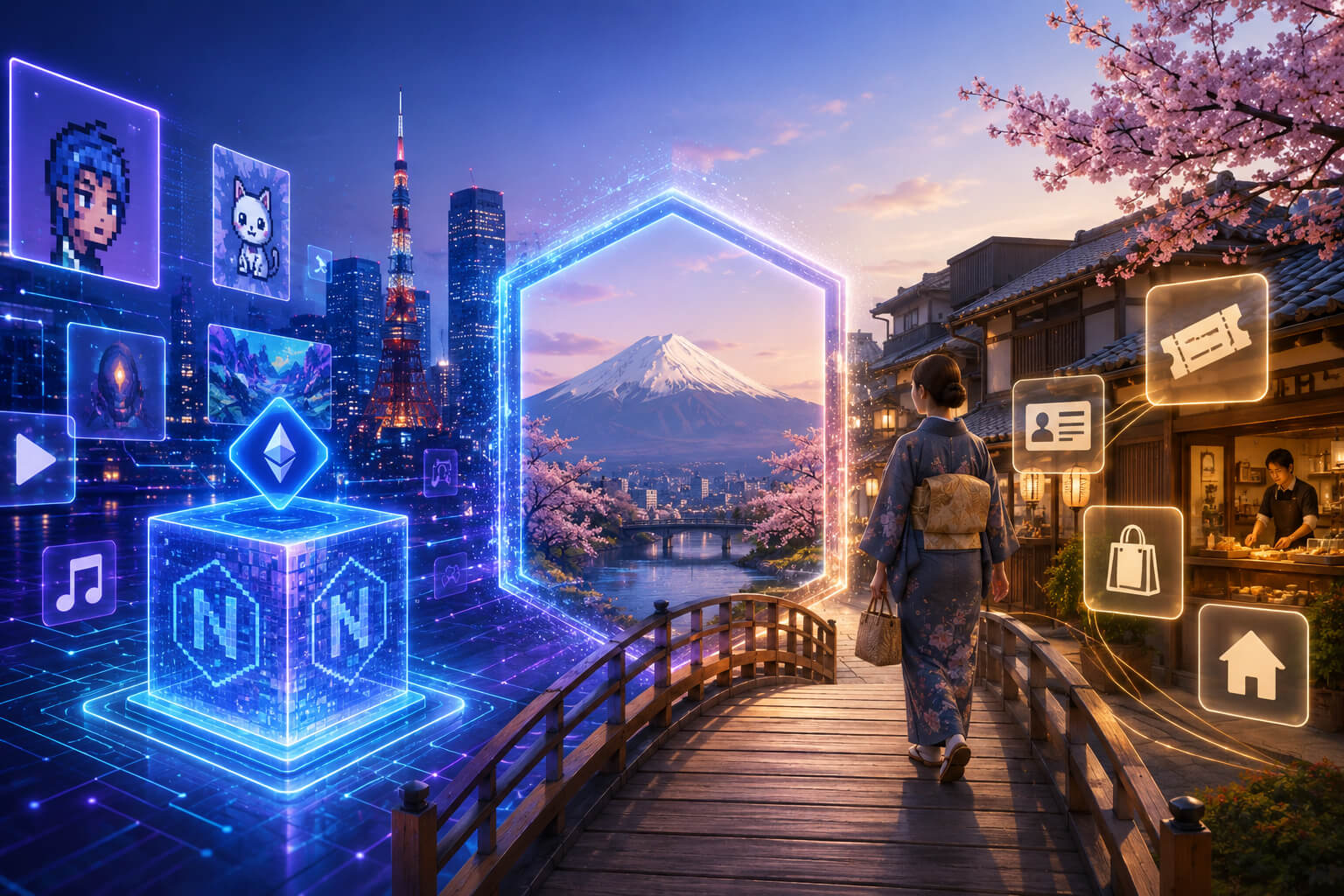
Local governments and regional organizations can use NFTs as part of tourism campaigns, digital membership programs, or community-building efforts. A token might provide access to an event, confirm participation in a local project, or give supporters a continuing connection to a particular region.
Sports organizations are exploring a similar idea. NFTs can serve as digital memorabilia, membership credentials, ticket-linked rewards, or special access passes for fans.
This is not the explosive NFT narrative that dominated crypto headlines several years ago. It is smaller, slower, and tied to something people already care about.
Brands Are Treating NFTs as Community Tools
Brand marketing has also become an important testing ground for the Japan NFT market shift.
Instead of releasing a collection and hoping traders push up its floor price, companies can connect NFTs to loyalty programs, limited products, events, customer rewards, or fan experiences.
The NFT becomes one part of a larger relationship.
That difference matters. A token built only for resale depends heavily on the next buyer arriving. A token connected to access, identity, rewards, or participation can continue to have a purpose even when trading activity is quiet.
Brands still need to give people a reason to use it. Simply attaching blockchain technology to an ordinary campaign will not magically make the campaign interesting.
The novelty has worn off. Utility now has to carry the idea.
Education Could Become an Overlooked NFT Use Case
Yano Research Institute also pointed to education as an area where NFT adoption could expand.
Schools and other educational organizations may use blockchain-based credentials to verify completed courses, achievements, skills, or learning outcomes. Because blockchain records can help demonstrate authenticity and transaction history, NFTs may provide another way to issue credentials that learners can retain and present digitally.
This use case feels far removed from cartoon avatars and speculative marketplaces.
It also shows why the term “NFT” may eventually matter less than the function operating underneath it. A student may not care whether a certificate technically uses a non-fungible token. The important part is whether employers or institutions can verify it easily.
That is where real adoption tends to happen: when the technology becomes less visible.
Japan’s Wider Digital Content Market Is Changing Too
The Yano study did not examine NFTs in isolation.
Researchers assessed Japan’s broader digital content economy, including social media, internet advertising, video streaming, music streaming, electronic books, gaming, and major digital platforms. The results showed that these segments are not moving in the same direction or at the same speed.
Online advertising and streaming continue to show growth, while electronic books remain supported by strong demand for digital comics. Hardware sales also influence the gaming market, making console and device cycles part of the wider picture.
At the platform level, another shift is underway.
Major technology companies are moving beyond the race to develop increasingly capable AI models. They are now trying to connect AI with products people already use for searching, comparing options, shopping, watching content, and making payments.
The goal is not only to offer smarter technology. Platforms want to make their ecosystems harder to leave.
NFT Projects Now Need More Than a Good Launch
The practical NFT shift does not guarantee that every utility-focused project will succeed.
A token can promise membership, rewards, education, tourism benefits, or fan engagement and still end up unused. Projects need active communities, clear benefits, reliable technical systems, and a reason for participants to return.
That last part often gets ignored.
Many NFT campaigns were built around launch day. The artwork appeared, the tokens sold, promotional posts went live, and then activity dropped. Long-term community management received far less attention.
Japan’s emerging model points in another direction. The token should support an ongoing program rather than become the entire program.
The NFT Market May Be Getting Quieter but More Useful
The loudest period of the NFT market made blockchain collectibles difficult to ignore. It also encouraged unrealistic pricing, shallow projects, and endless speculation about which collection might suddenly become valuable.
Japan now appears to be entering a more practical phase.
NFTs are showing up in regional promotion, sports engagement, brand communities, education, gaming, and other settings where ownership or participation needs to be recorded digitally. Trading remains part of the technology, but it is no longer the only point.
There may be fewer dramatic headlines in that version of the market.
There may also be more projects that people continue using after the launch campaign ends.