
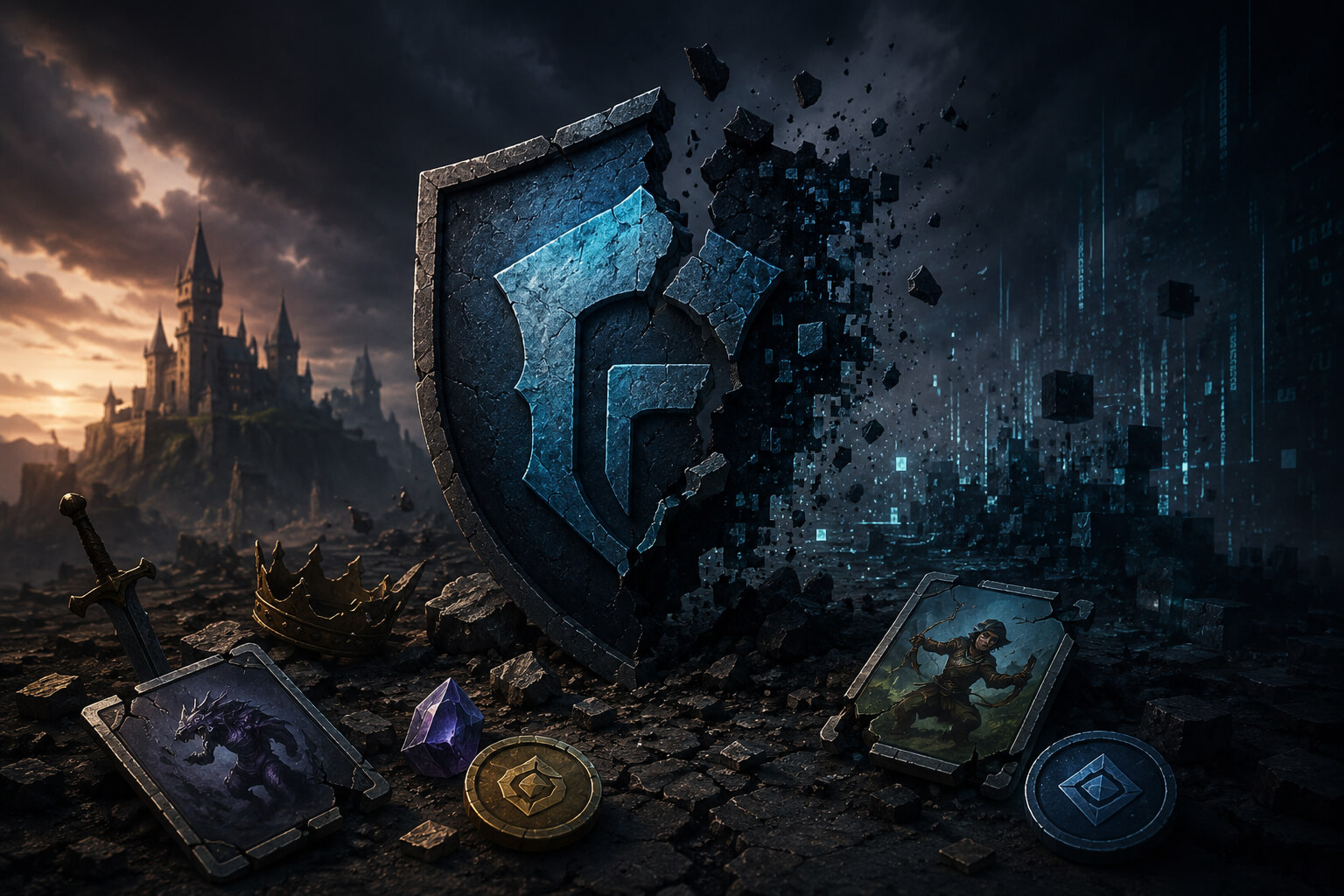
Another big red flag for both SocialFi and NFT gaming industries comes with the shut-down of Fantasy.top, which used its unique take on the concept of Web3 trading cards as its main selling point.
Fantasy.top was a Blast-based card game with a special twist – players were rewarded with NFT cards representing social media influencers and personalities. While Fantasy.top managed to gather some momentum, the lack of profits made the platform unsustainable.
Key Lessons of Fantasy.top’s Closure
As CryptoSlate reported, Fantasy.top decided to shut down after almost two and a half years since the launch. At the same time, Fantasy.top team announced pre-seed and seed investors would receive their money back without any losses. According to sources, the project managed to pay out about $20 million back to the players and heroes in ETH and other tokens.
What Was Fantasy.top?
Fantasy.top was an innovative Web3 card game where the key gameplay was built around NFT cards featuring different crypto influencers and online personalities. Basically, players had the chance to collect influencer-based cards and form teams to compete on the platform.
The core of Fantasy.top lay in a combination of several crypto-native ideas:
Fantasy games, influencers, NFTs, tradable cards, and crypto rewards.
From a promotional perspective, this was the perfect Web3 gaming idea since it perfectly blended the main aspects of the crypto world. Instead of collecting imaginary characters and objects, users had a chance to get their hands on something tangible and measurable.
On the other hand, Fantasy.top’s focus on social media celebrities turned out to be one of the biggest flaws of the platform.
What Made Fantasy.top Fall Apart?
Fantasy.top didn’t shut down just because of its uninteresting concept. On the contrary, the main reason why Fantasy.top was doomed to fail was in its economic structure, which focused on financial incentives.
While traditional card games (such as Pokemon) rely on gameplay and competition, Fantasy.top placed more importance on financial gains. In other words, cards in Fantasy.top behaved similarly to financial assets and their value depended on gameplay updates.
While that approach was quite revolutionary at first, it ultimately led to problems. First of all, any gameplay or card-related changes could lead to financial losses, which could negatively impact users’ experience. As a result, each change became a controversy and the gameplay was compromised.
The Biggest Challenge for SocialFi
With its closure, Fantasy.top proved what SocialFi has been struggling with for a long time already. Namely, most SocialFi products use financial incentives to boost initial user engagement. However, that kind of promotion doesn’t always work in the long run.
That concept is also known as mercenary capital among crypto community. In other words, users join a project for a quick reward and leave as soon as financial incentives dry up.
Fantasy.top seems to face the same issues as most other platforms relying on financial incentives.
Implications of Fantasy.top’s Shut Down for NFT Games
Although this failure does not prove that NFT games do not work in general, it does prove something else – financial incentives do not guarantee success.
Namely, Fantasy.top proves that simply implementing NFT technology does not help developers create a winning product. In order to attract users, NFT games require solid gameplay and emotional engagement. Otherwise, the project becomes dependent on financial incentives, which is never good in the long-run.
In fact, the key factor that makes any NFT game worth playing is the following: would people keep playing if there were no rewards anymore?
If the answer is no, then the game was built with speculation rather than loyalty in mind.
Important Takeaways From Fantasy.top’s Failure
Here are some important lessons for Web3 developers based on Fantasy.top’s closure:
- Reward systems have to be used responsibly. A game, relying too much on financial incentives, will eventually fall apart when those incentives disappear.
- NFT items should be carefully chosen as every change could become controversial. The same principle applies to any other type of collectible.
- Community is impossible to buy. Even though incentives work great during the initial launch, true loyalty can be achieved only by means of quality content.
- SocialFi products need to focus more on engagement and value than on financial incentives. In other words, the core product itself needs to be interesting to the community.
Conclusion
Overall, Fantasy.top shutting down represents yet another proof of what SocialFi and NFT gaming need right now. Although the initial concept was quite intriguing and got the project much attention, Fantasy.top failed to maintain that momentum due to poor community engagement.