
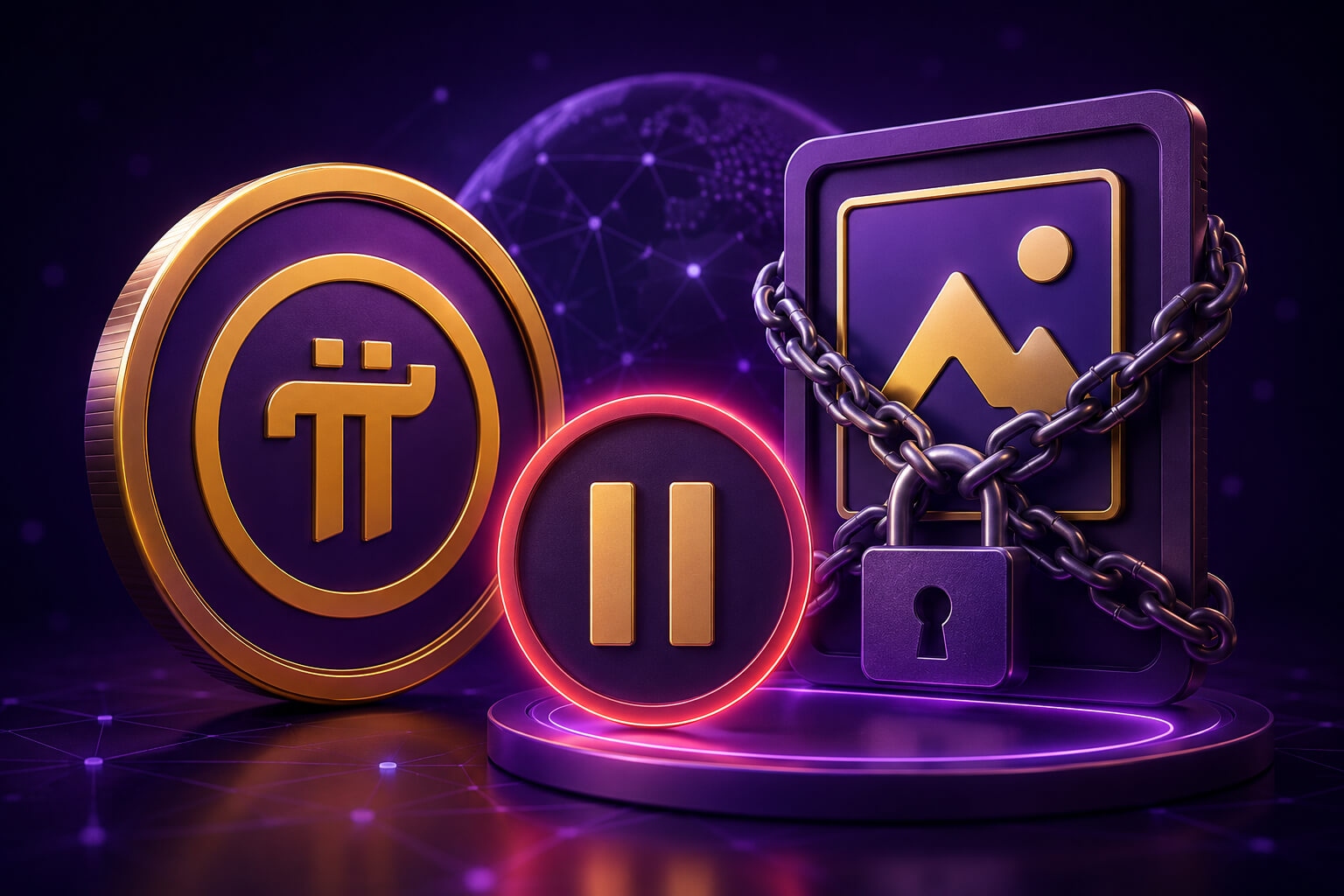
Pi Network’s Community Cup NFT drop was going so well it broke itself.
Minting for the collection got shut off this week after a wave of users showed up at once and pushed the network’s RPC system past what it could handle. If you already paid for your NFT, take a breath — your money and your mint are safe. If you were mid-click when things froze, here’s the full story.
So What Actually Happened to Pi Network NFT Minting?
Here’s the short version: too many people tried to mint at the same time, and the plumbing behind Pi Network couldn’t keep up.
The Community Cup NFT collection had been drawing serious traffic — way more than a typical drop. All that activity funneled through Pi’s RPC system, the layer that lets apps and wallets actually talk to the blockchain. When too many requests hit it at once, performance started to slip. Rather than let things degrade further and risk corrupting data, the dev team pulled the plug on claims across the whole collection. It’s a pause, not a cancellation.
Wait, What Even Is an RPC and Why Does It Matter?
RPC stands for Remote Procedure Call, and it’s basically the messenger between your wallet and the blockchain itself.
Every time you mint an NFT, check a balance, or send a transaction, something has to carry that request to the network and bring the response back. That’s the RPC’s job. It’s unglamorous infrastructure — nobody brags about their RPC setup — but when it buckles, everything downstream buckles with it. Requests stall, transactions fail, and users are left staring at a spinning wheel wondering if their money vanished. This is exactly what happened here: too much traffic, not enough RPC capacity to absorb it.
Your Payment Is Fine — Here’s Why
This is the part people actually care about, so let’s be direct: if you paid, your NFT is coming.
The dev team confirmed that every completed transaction is already logged in the database. Nothing gets lost just because claims are paused. Once the system stabilizes, minting will resume and those recorded purchases will process normally. The only thing on hold right now is new claims — not the payments people already made. One function is still running during the pause too: Community Pass minting hasn’t been touched, so it’s not a total shutdown, just a targeted one aimed at the part of the system under the most strain.
Why Pausing Was the Right Call
Nobody likes hearing “temporarily disabled,” but in this case it’s the boring, responsible move.
Letting a strained system keep absorbing traffic risks worse outcomes: dropped transactions, mismatched records, or data that’s harder to untangle later than it would’ve been to just stop and fix. Pi’s team chose to freeze new claims rather than gamble with everyone’s existing purchases. That’s a trade worth making. It buys time to patch the actual bottleneck instead of duct-taping a system that’s already under load.
This Traffic Jam Is Actually a Compliment
It’s easy to read “system overload” as a bad headline. It’s really the opposite.
Systems don’t get overwhelmed by indifference — they get overwhelmed by demand nobody fully planned for. The Community Cup NFTs pulled in enough interest to expose a bottleneck that wouldn’t have shown up with lighter traffic. That’s a sign people showed up in numbers the team underestimated, which is a much better problem to have than an NFT drop nobody wanted.
Pi Network’s Story Isn’t Just About the Coin Anymore
For a long time, conversations about Pi Network started and ended with the price of Pi Coin. This incident is a reminder that’s changing.
NFTs represent a different kind of activity: ownership, collecting, community identity — the stuff that makes a blockchain feel like an actual ecosystem instead of a ticker symbol. Networks that last tend to build several layers of activity beyond just trading the base token — apps, digital assets, developer tools, community events. A rush intense enough to knock over the RPC system says people are engaging with Pi Network on that level now, not just watching a chart.
The Infrastructure Lesson Every Blockchain Eventually Learns
This isn’t a Pi-specific problem. Every blockchain project that grows fast eventually gets a version of this exact wake-up call.
Scalability is the industry’s oldest, least glamorous headache. Networks far more established than Pi have had to rebuild infrastructure mid-stride because usage outpaced what they’d originally engineered for. What matters isn’t whether the strain happens — it basically always does eventually — it’s how a team responds when it does. Freezing claims to protect user data, rather than letting the system limp along broken, is the move that separates teams that learn from this from teams that don’t.
What Happens Next
Once RPC performance stabilizes, expect minting to pick back up and those queued payments to start processing.
There’s no confirmed timeline yet, so the practical advice is simple: don’t resubmit payments, don’t panic if your mint hasn’t shown up, and watch official channels for the restart announcement. Acting on rumors or trying workarounds right now is more likely to cause confusion than to speed anything up.
The Bigger Picture
Bottlenecks like this aren’t a Pi Network problem so much as a Web3 problem that shows up everywhere eventually.
High-demand launches routinely expose whatever a network’s infrastructure wasn’t quite ready for — that’s true across the industry, not just here. The projects that come out ahead are the ones that treat these moments as data instead of disasters, then actually rebuild for the next surge instead of hoping it doesn’t happen again.
Bottom Line
Pi Network’s Community Cup NFT minting is paused, not dead. The cause was a traffic spike big enough to strain the RPC system, and the fix was disabling new claims while leaving Community Pass minting active. If you already paid, your NFT is recorded and safe — it’ll process once things stabilize. Everything else is a waiting game that, going by the team’s own updates so far, looks like it’s headed toward a normal resolution.
Sources: