
Key Takeaways
- Fake NFTs are a growing issue in 2026, with scammers replicating and reselling digital assets posing as authentic.
- NFTs rely on blockchain for transaction records but lack a system to verify the originality of linked digital assets.
- Buyers should verify sources, stick to trusted marketplaces, and check creator details to avoid fake NFTs.
- The escalating problem of fake NFTs risks eroding trust in the digital asset ecosystem, affecting both buyers and creators.
- Staying informed about fake NFTs is crucial for making safe purchases in the evolving market.
The Rise of Fake NFTs in 2026
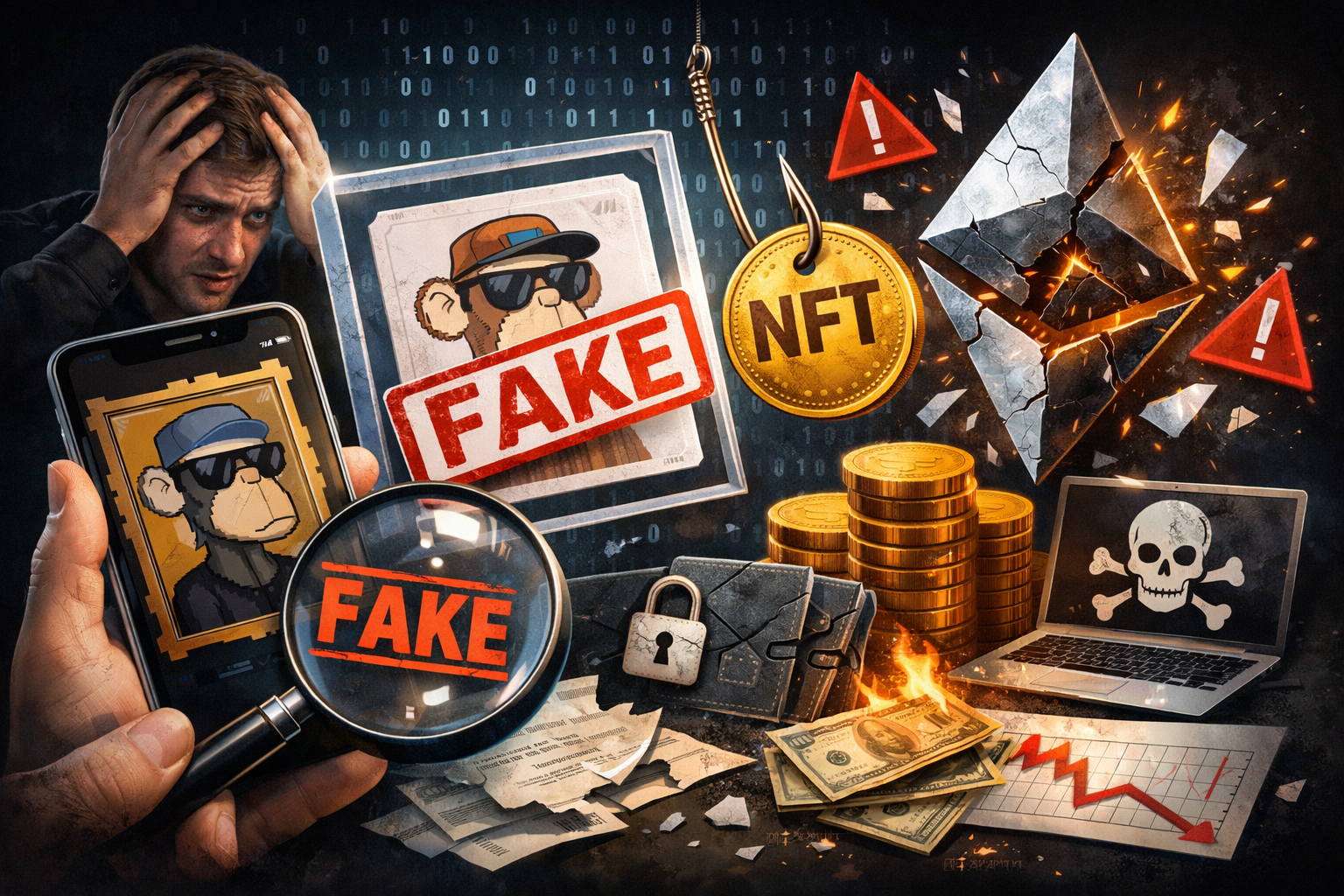
Fake NFTs are becoming a serious problem in 2026, as scammers grow more advanced in copying and reselling digital assets that appear authentic. A recent report reveals how fraudulent actors are minting duplicate versions of legitimate artwork and collections, then listing these fake NFTs on unofficial platforms or distributing them through phishing links. For many buyers, especially those new to the space, spotting the difference between a real NFT and a fake NFT is becoming increasingly difficult.
How Fake NFTs Trick Buyers
The core issue lies in how NFTs work. While blockchain technology ensures that transactions are recorded and visible, it does not automatically verify whether the digital asset linked to a token is original. Scammers exploit this by copying images or media, minting them as new tokens, and presenting them as genuine. In some cases, entire NFT collections are replicated with similar names, branding, and metadata, making these fake NFTs look nearly identical to the real ones.
How to Spot and Avoid Fake NFTs
The report highlights several ways to protect yourself from fake NFTs. One of the most important steps is verifying the source before making any purchase. Buyers should stick to trusted marketplaces and confirm official links from creators or projects. Checking the creator’s wallet address, reviewing transaction history, and evaluating the project’s community presence can also help identify whether an NFT is legitimate. Offers that seem unusually cheap or urgent should be treated with caution, as they are often tactics used in fake NFT scams.
Why Fake NFTs Matter for the Future
The rise of fake NFTs doesn’t just affect individual buyers—it impacts the entire digital asset ecosystem. Increasing fraud can erode trust in NFTs, slowing adoption and discouraging new participants. For creators, fake NFTs can damage their reputation and reduce the value of their original work. As the industry grows, awareness and education are becoming essential tools in protecting both collectors and artists from these threats.
As fake NFTs continue to evolve, staying informed may be the most valuable investment you can make. How confident are you that the next NFT you buy is truly real?
👉 Read more: https://nftnewstoday.com/2026/03/27/fake-nfts-explained-how-to-spot-avoid-and-protect-yourself-in-2026