
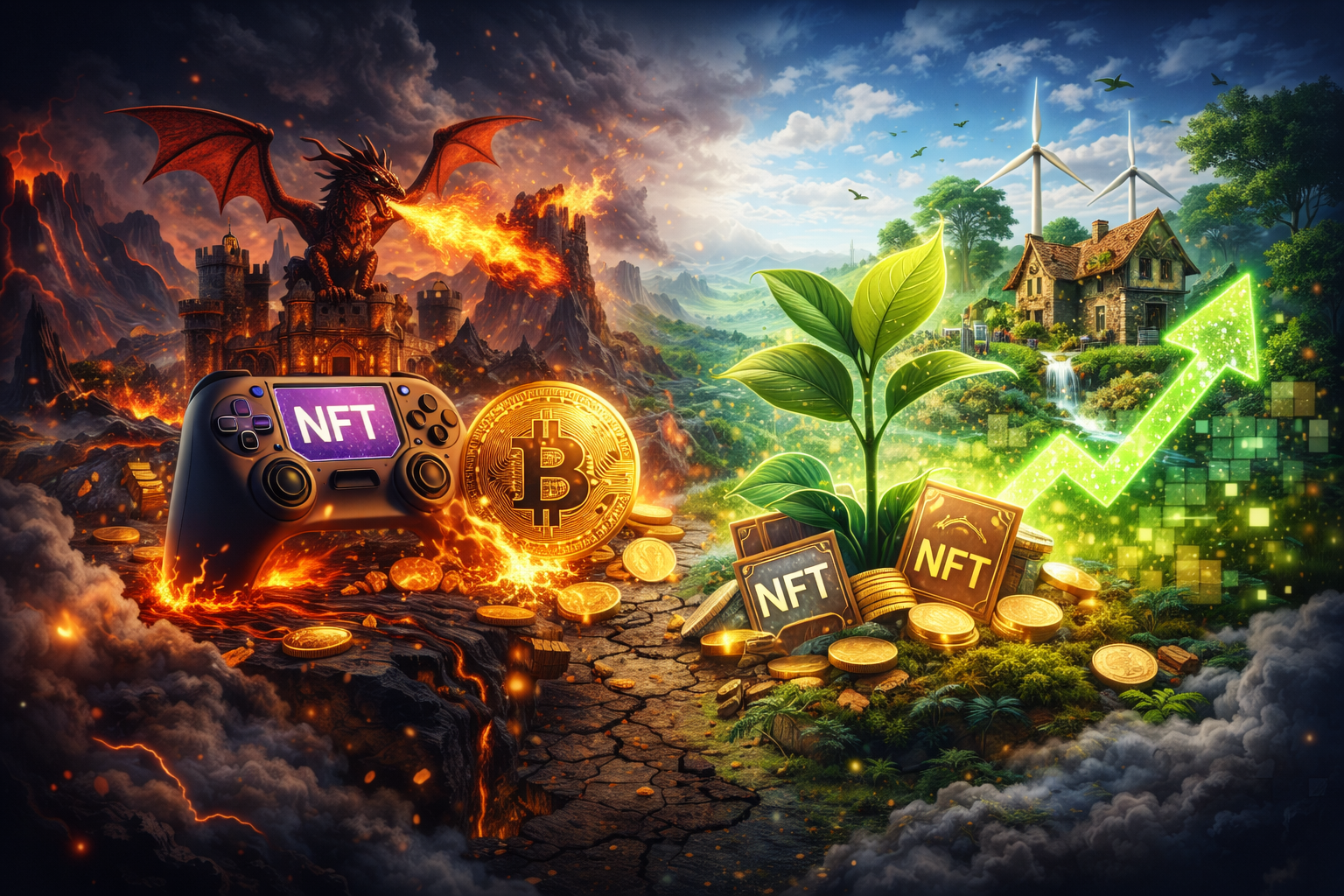
NFT gaming economies struggle because many projects have failed to build sustainable value and balanced incentive systems. The article explains why play-to-earn models often collapse and what economic issues weigh on blockchain games.
Weak link between gameplay and asset value
A core challenge is that many NFT games have assets that are detached from meaningful gameplay. Players may earn tokens or NFTs, but if those rewards do not enhance the gaming experience or long-term progression, demand weakens. Without clear utility tied to game mechanics, assets risk becoming speculative rather than earning genuine user engagement.
Overreliance on speculative demand
Many NFT games depended on rising token prices to attract players. Early adopters were drawn by the potential to sell NFTs at a profit or earn tokens with monetary value. When token prices fell or failed to grow, player interest declined. This overreliance on speculation rather than intrinsic gameplay value undermined economic stability.
Imbalanced reward systems
The economics of play-to-earn often created reward structures that were unsustainable. Games distributed large amounts of tokens to players without corresponding sinks or mechanisms to remove tokens from circulation. This imbalance led to inflationary pressures, reducing token value and discouraging long-term participation.
Costs for new entrants
High entry costs also contributed to why NFT gaming economies struggle. Some games required upfront investment in NFTs or tokens to start earning. When expected returns did not materialise, potential players were priced out or discouraged from joining. This limited user growth and reduced liquidity in secondary markets.
Technical and user experience barriers
Complex blockchain requirements, high fees on some networks, and clunky wallet integration made NFT games less accessible to a mainstream audience. The added friction of managing digital assets and gas costs dampened adoption among casual gamers.
Regulatory and legal uncertainty
Unclear regulatory frameworks around tokens, digital assets, and rewards added risk for developers and players. Questions about securities laws, taxation, and compliance discouraged investment and slowed the formation of robust economic models in some regions.
Need for balanced economy design
Experts say successful NFT gaming economies require careful design that balances reward issuance with sinks and meaningful utility for assets. Games need to link token mechanics directly to core gameplay and progression so that earning and spending contribute to a positive player experience.
Conclusion
NFT gaming economies struggle because of weak links between assets and gameplay, overreliance on speculative value, imbalanced token reward systems, high entry costs, and technical and regulatory barriers. Addressing these issues is key to building more sustainable blockchain-based games.
Source: https://financefeeds.com/why-nft-gaming-economies-struggle/