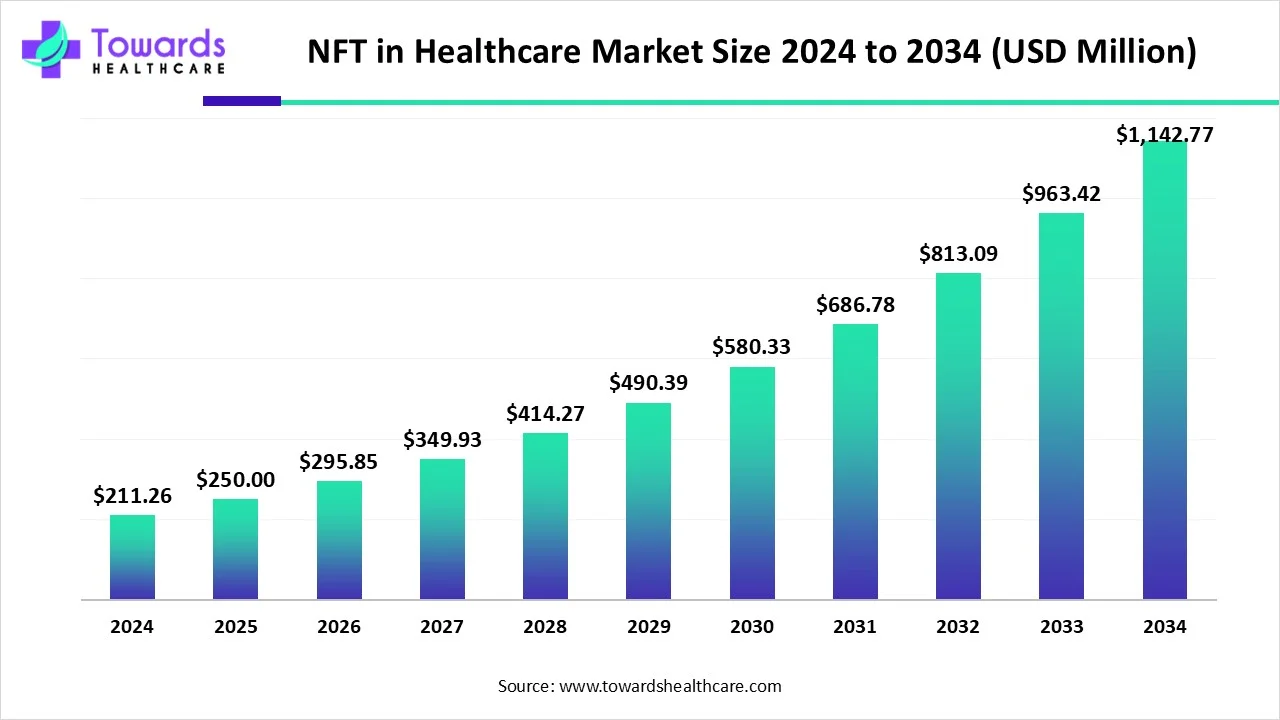
The NFT in healthcare market is projected to grow sharply through 2034. A report published on January 14, 2026 forecasts market value rising from about USD 250 million in 2025 to around USD 1,142.77 million by 2034. The projection covers a period of roughly ten years.
Non-fungible tokens (NFTs) are unique digital assets recorded on distributed ledgers. In healthcare, NFTs are being explored for data security, patient records, and supply chain tracking. The report states that adoption of blockchain technology contributes to market growth.
The analysis divides the market into several segments. One segment covers applications, including patient data management, drug traceability, and medical records. Another segment covers end users, such as hospitals, pharmaceutical companies, and research institutions. The report also considers geographic regions, including North America, Europe, Asia Pacific, and the rest of the world.
North America is forecast to hold a significant share of the NFT in healthcare market. The region’s growth is linked to technological adoption and investment in digital health infrastructure. The United States is a major contributor within North America. Europe and Asia Pacific are also cited as expanding markets, driven by digital transformation initiatives in healthcare.
Drivers of the projected growth include rising demand for secure and interoperable medical data systems. NFTs are expected to offer tamper-proof records, according to the report. Blockchain based solutions are also seen as useful for tracking pharmaceuticals through supply chains, aiding in authenticity verification and anti-counterfeiting efforts.
The report cites research activities and pilot projects that involve NFTs in healthcare. It notes that healthcare providers and technology vendors are increasingly exploring distributed ledger applications. Government policies supporting digital health infrastructure are also mentioned as contributing factors in some regions.
Challenges identified include regulatory uncertainty and integration barriers. The report states that healthcare systems face complexity in adopting new digital frameworks. It notes that comparative lack of standardized protocols for blockchain use could limit adoption speed.
The forecast includes compound annual growth rate (CAGR) estimates, showing steady expansion through 2034. The report emphasises continued interest from both private and public sector stakeholders. Future opportunities highlighted include solutions for secure patient consent records, telemedicine verification, and research data sharing.
Overall, the projected increase from USD 250 million to over USD 1.14 billion reflects anticipated expansion of NFT use cases in healthcare over the next decade.