
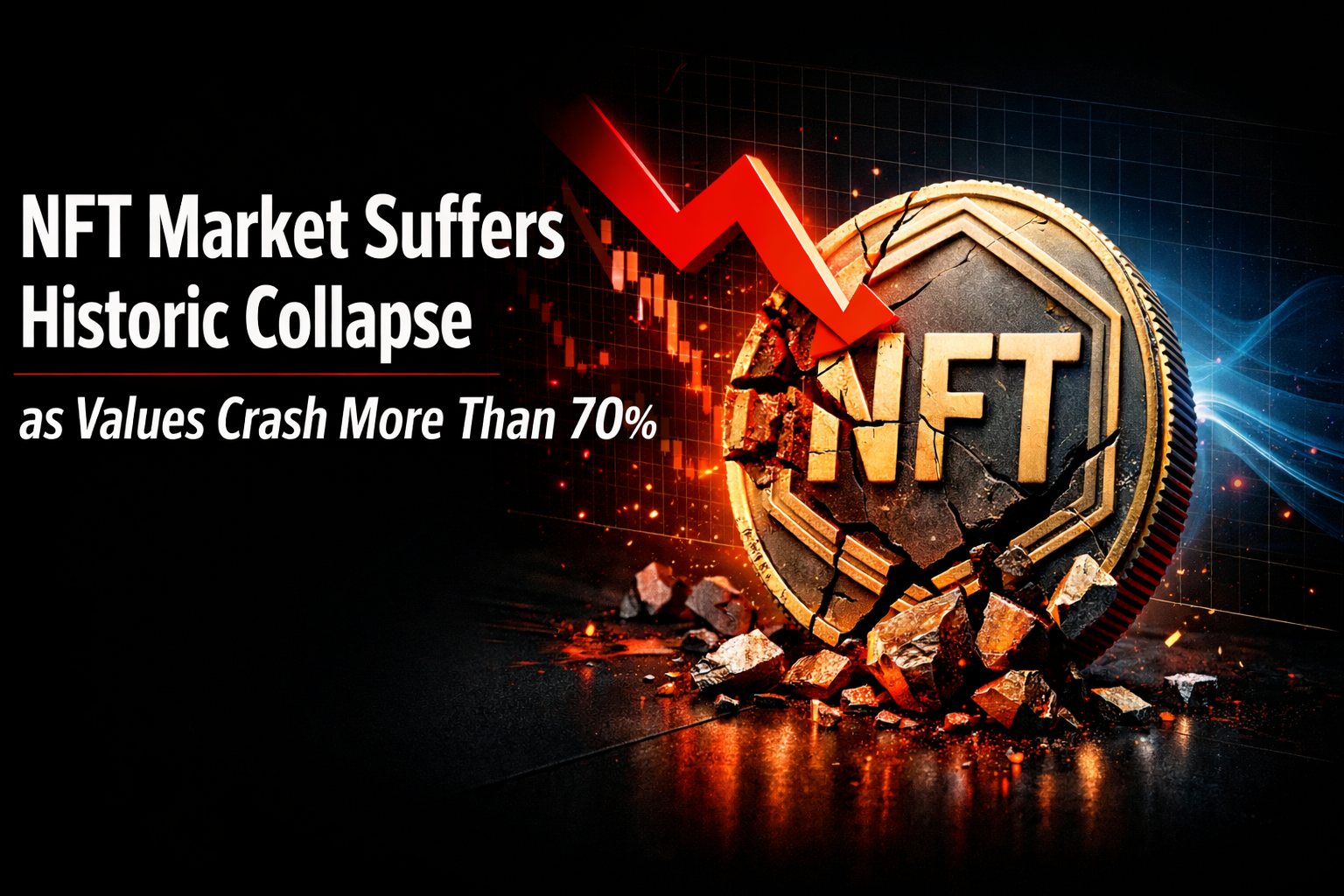
GLOBAL — The global non-fungible token (NFT) market has undergone one of its most severe downturns on record, with aggregate values plunging by more than 70% from peak levels — effectively wiping out hundreds of billions of dollars in speculative value and forcing a fundamental reassessment of the sector’s long-term viability.
Once hailed as a revolutionary model for digital ownership, the NFT market has seen trading volumes, floor prices, and user activity collapse across nearly all major collections, signaling the end of the speculative boom that defined the industry’s rapid rise in 2021–2022.
A Market Reset of Unprecedented Scale
According to multiple industry trackers, NFT trading activity has fallen to multi-year lows, with quarterly volumes down as much as 80% compared to peak periods. Even so-called “blue-chip” collections — once considered resilient stores of digital value — have not been spared.
Key indicators show:
- NFT sales volumes declining for five consecutive quarters
- Floor prices of leading collections dropping between 60% and 90% from all-time highs
- A sharp contraction in new user participation and wallet activity
The data points to a broad, systemic retreat rather than a temporary correction.
Why the NFT Market Collapsed
Market analysts cite a convergence of structural and macroeconomic factors:
1. Speculation Exhaustion
Early NFT growth was driven largely by short-term speculation, celebrity endorsements, and rapid price appreciation. As returns diminished, liquidity evaporated, leaving many holders unable to exit positions without significant losses.
2. Crypto Market Correlation
NFT prices remain tightly linked to broader cryptocurrency markets. Prolonged weakness in major digital assets reduced risk appetite and undermined the perceived value of speculative digital collectibles.
3. Oversupply and Dilution
An explosion of low-quality NFT projects diluted demand. As barriers to minting fell, scarcity — a core pillar of NFT value — was eroded.
4. Weak Utility Economics
Many NFTs failed to deliver meaningful utility beyond ownership claims. Promised use cases such as gaming integration, metaverse access, and revenue sharing often failed to materialize at scale.
5. Regulatory and Legal Pressure
Growing scrutiny around consumer protection, intellectual property rights, and securities classification further dampened institutional and brand participation.
Collapse or Maturation?
While headlines describe the downturn as a “wipeout,” some analysts argue the current phase represents a necessary market cleansing rather than the end of NFTs altogether.
Speculative collectibles are being replaced by utility-driven digital assets, including:
- In-game items tied to active gaming economies
- Tokenized memberships and access passes
- NFTs linked to real-world assets and experiences
- Identity, ticketing, and brand-authentication use cases
These segments typically generate lower valuations but more sustainable engagement, marking a shift away from hype-based pricing.
Impact on Investors, Brands, and Creators
For early retail investors, the crash has resulted in substantial capital losses and diminished confidence in digital collectibles as an asset class. Many brands that rushed into NFTs during the boom have quietly paused or exited initiatives, while others face reputational and legal fallout from unmet expectations.
Creators, meanwhile, are rethinking monetization strategies — moving toward hybrid models that combine NFTs with subscriptions, physical goods, community access, or live experiences.
What Comes Next for NFTs?
Industry veterans increasingly view the NFT market not as dead, but radically transformed. Future growth is likely to be slower, more regulated, and far less speculative.
Key trends shaping the next phase include:
- Tighter regulatory frameworks
- Emphasis on provable utility and long-term value
- Integration with gaming, payments, and identity systems
- Declining prominence of “profile-picture” collectibles
The collapse has exposed fundamental weaknesses — but also clarified where NFTs may still deliver lasting value.
The End of Hype, Not the Technology
The NFT crash marks the definitive end of an era defined by speculation and excess. What remains is a smaller, more disciplined ecosystem focused on function over frenzy.
As one market analyst put it: “NFTs didn’t disappear — unrealistic expectations did.”
Sources
- HokaNews — NFT Market Wiped Out as Values Crash 72%
https://www.hokanews.com/2025/12/nft-market-wiped-out-values-crash-72.html - CryptoNews / DappRadar — NFT Trading Falls for Fifth Consecutive Quarter, Down Nearly 80%
https://cryptonews.com/news/nft-trading-falls-fifth-consecutive-quarter-down-80-to-823m-dappradar-reports/ - Cryptopolitan — NFT Market Slumps for Fifth Straight Quarter
https://www.cryptopolitan.com/nft-market-slumps-for-fifth-straight-quarter/ - BeInCrypto — NFT Market Outlook: From Speculation to Utility
https://beincrypto.com/nft-market-2025-future-outlook/ - Fast Company — The NFT Market Fell Apart — Brands Are Still Paying the Price
https://www.fastcompany.com/91324745/the-nft-market-fell-apart-brands-are-still-paying-the-price